Residential + commercial concrete across PEICharlottetown Concrete Pros — Concrete Services & Contracting
Welcome to Charlottetown Concrete Pros. We connect property owners, builders and facility teams with clear estimates for concrete installations in Charlottetown and communities across Prince Edward Island. From commercial floors and foundations to driveways, patios and pool decks, every enquiry starts with the site, intended use and practical scope.
Commercial & residential scopesPEI-wide project enquiriesClear, no-pressure estimates
Built around the job, not a stock packageWhat concrete work are you planning?
Concrete looks simple once it has cured, but the finished surface hides most of the decisions that determine how it performs. Excavation, base preparation, drainage, forms, reinforcing, mix selection, placement access, joints, finishing and curing all have to work together. Charlottetown Concrete Pros gives you one place to describe the complete job and request a scope-based estimate.
Our focus includes higher-value installations for commercial, residential and agricultural properties. That means broad slab floors, foundations, shops and garage floors as well as exterior flatwork. It also means asking useful questions before anyone discusses a price: What will the slab support? Where can a truck or pump reach? Which elevations are fixed? How should water leave the area? Are drawings or permits involved? What finish will be safe for the way people use the space?
We serve Charlottetown as the main market and welcome suitable enquiries from Stratford, Cornwall, Summerside, Kensington, Montague, Souris, Three Rivers, the North Shore and rural communities throughout Prince Edward Island. Travel, concrete supply, equipment access and project size can affect scheduling, so location and scope are reviewed together.
Eight focused service areasConcrete contracting for homes, businesses and working properties

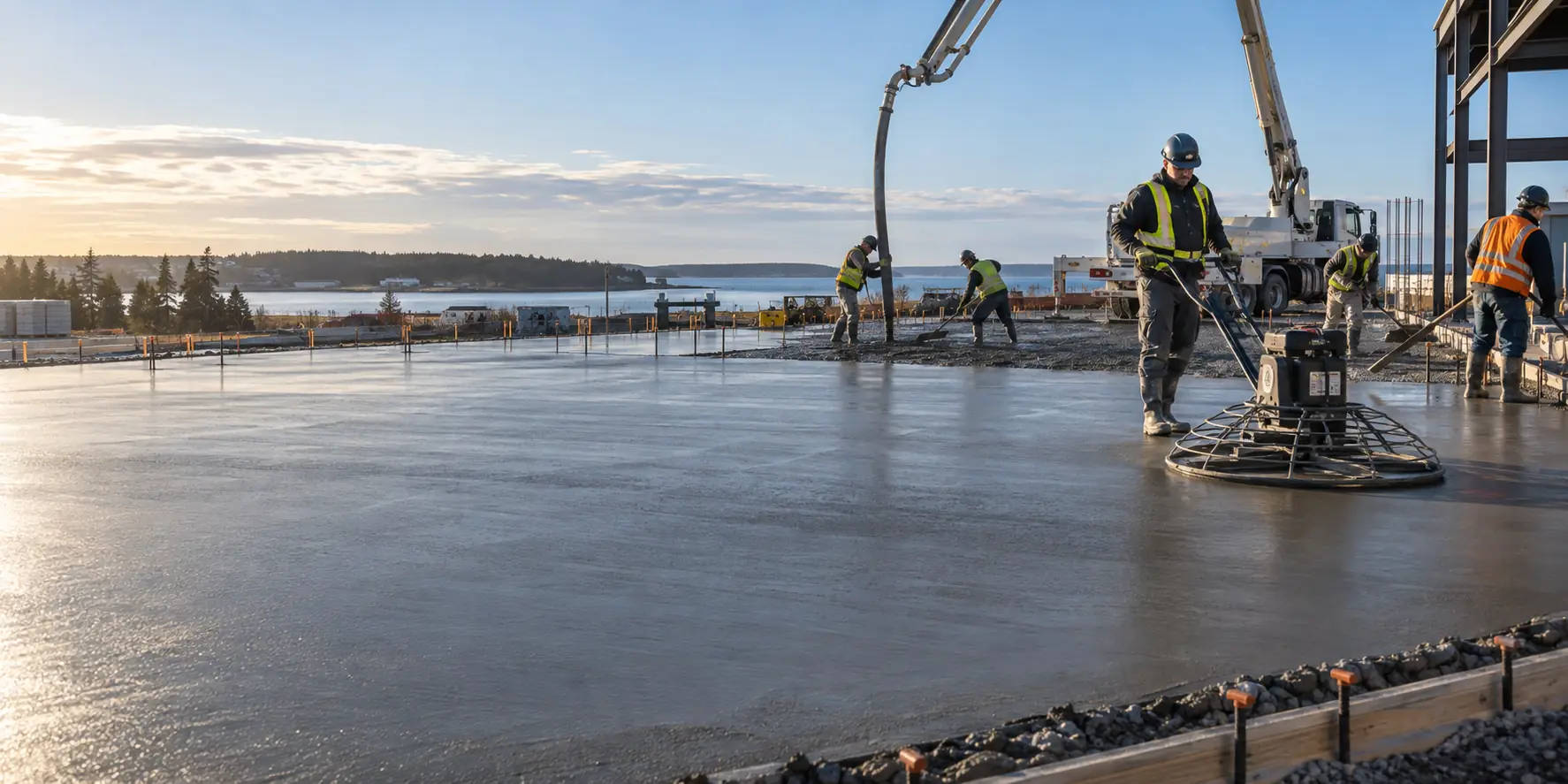
A commercial floor is part of the building’s operating system. It has to carry the planned loads, support equipment, drain where required and accept the intended finish. We help owners, builders and facility teams define a practical slab scope before concrete is placed.
Explore commercial concrete slabs and floors →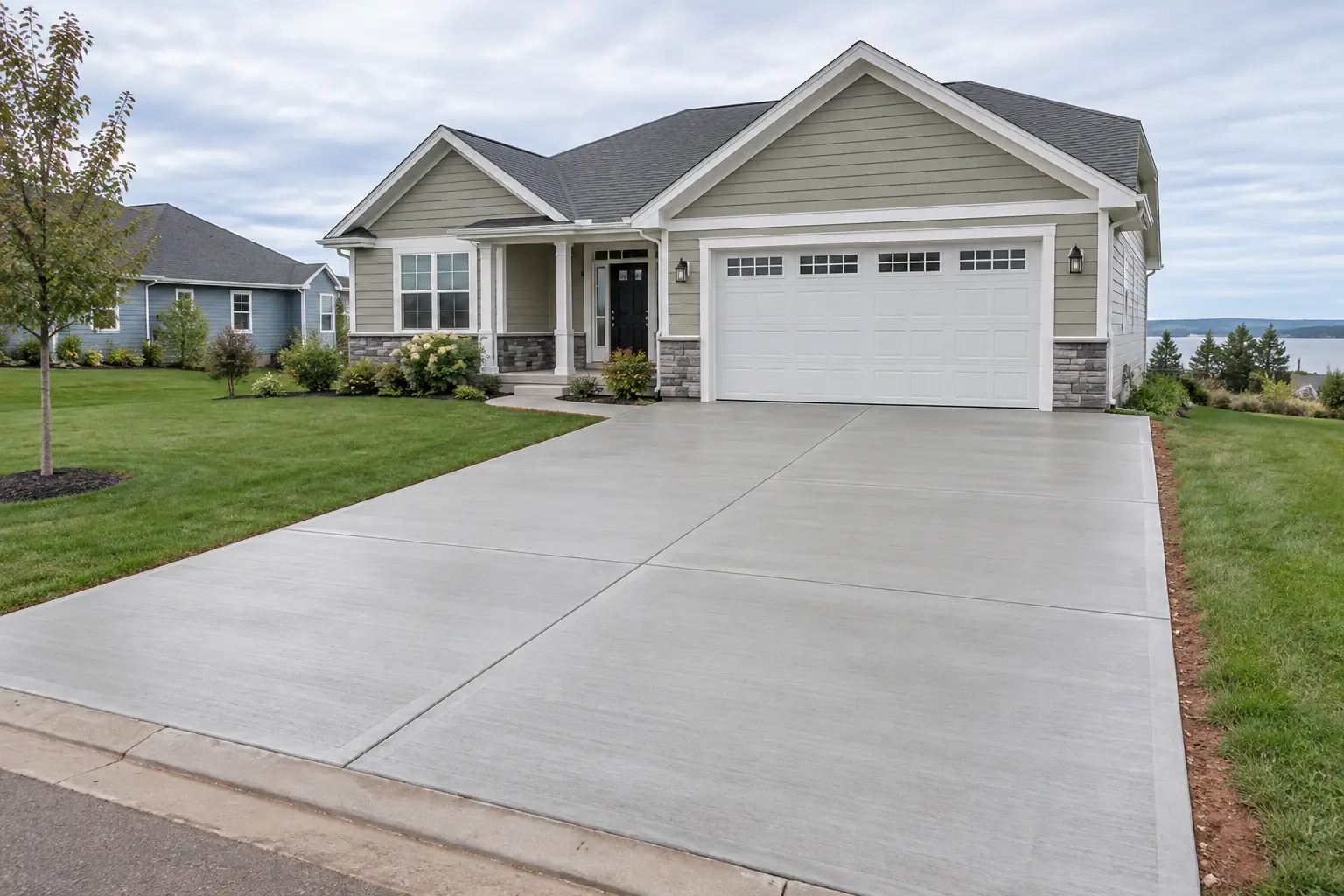
A driveway has to manage daily vehicles, winter weather and water moving across the lot. A successful installation begins below the visible surface, with the right excavation, compacted base and drainage plan for the property.
Explore concrete driveways →
A patio should feel like an outdoor room, not an unused slab behind the house. Good planning connects the door, dining area, grill, steps, paths and yard while sending water away from the building.
Explore concrete patios →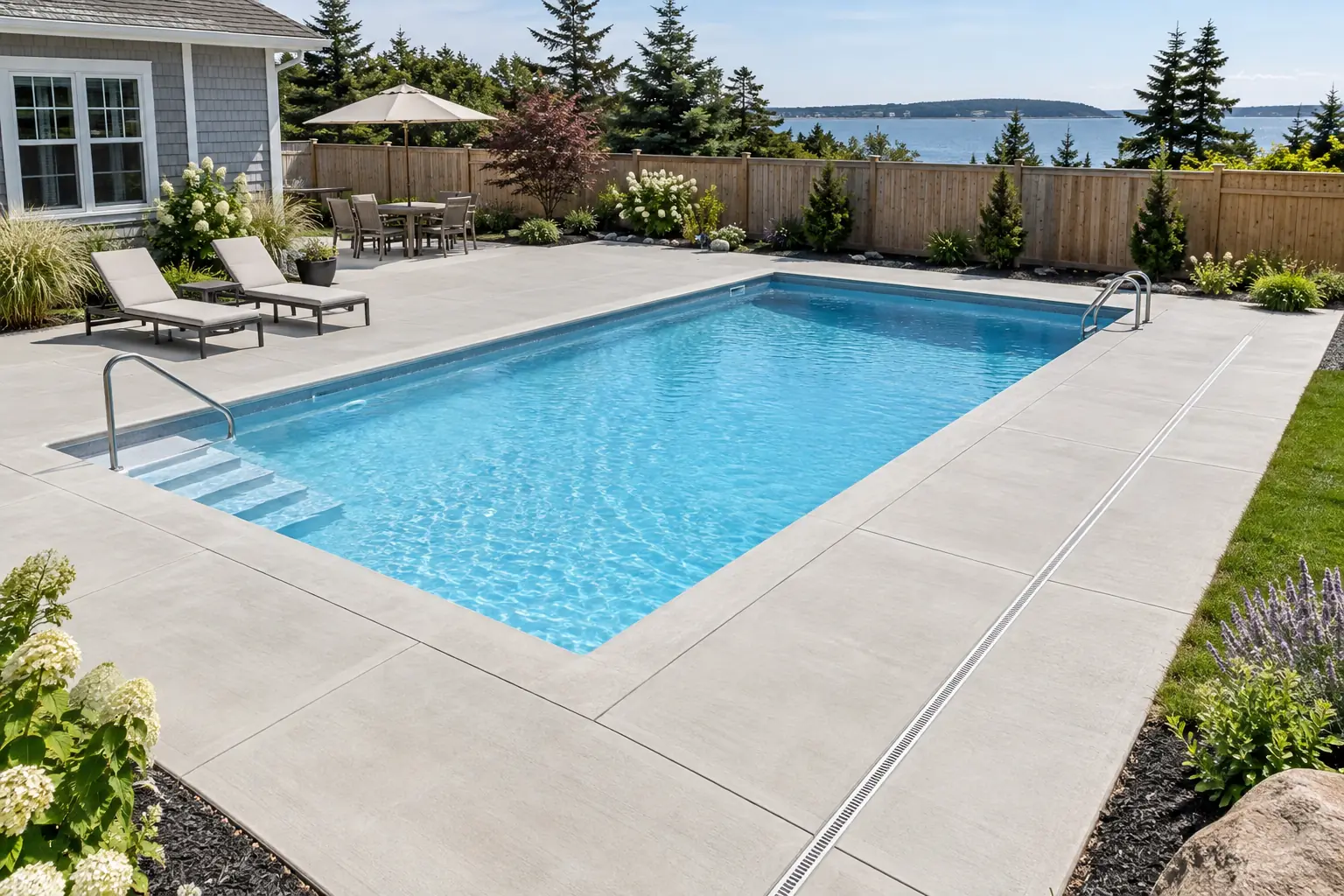
A pool deck is a wet-use surface. It needs comfortable circulation, dependable drainage and a finish that supports traction without becoming harsh underfoot. The layout must also coordinate with the pool structure and equipment.
Explore pool decks →
A walkway guides people safely between parking, entrances, yards and public sidewalks. Its grade, width, finish and transitions matter every day, especially during wet weather and winter maintenance.
Explore concrete sidewalks and walkways →
Decorative concrete can give a patio, walk or entrance the visual rhythm of stone while keeping a continuous concrete base. The best results come from choosing a restrained pattern, compatible colours and realistic maintenance expectations.
Explore stamped and decorative concrete →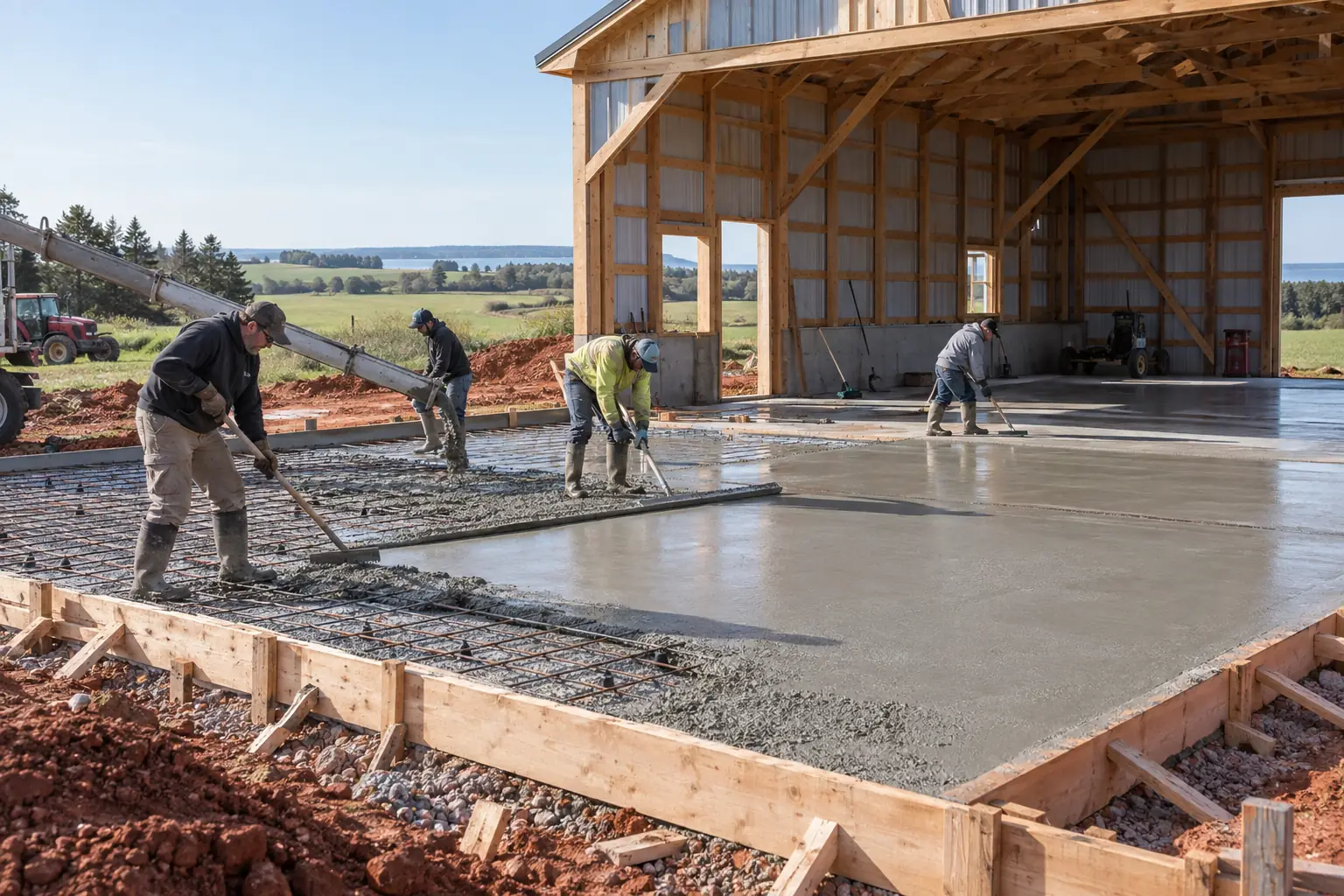
A garage or shop floor supports vehicles, storage, tools and often concentrated equipment loads. Planning should start with the building use and structural requirements, not a one-size-fits-all slab detail.
Explore garage and shop slabs →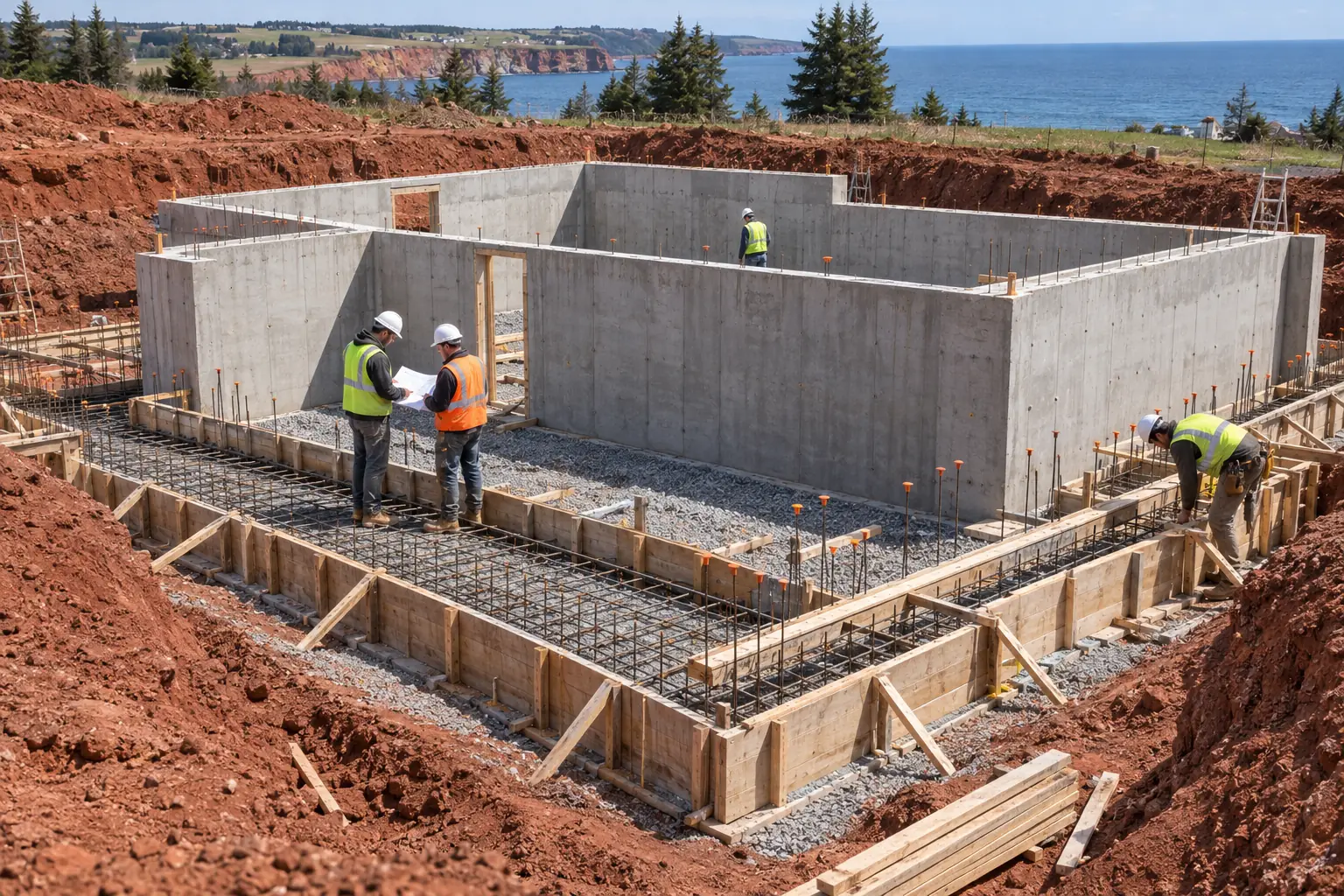
Foundations transfer a building’s loads into the ground and set the geometry for every trade that follows. Accuracy, coordination and compliance with the project design are essential from excavation through wall placement.
Explore concrete foundations and structural work →Commercial concreteFloor systems should match how the building operates
A warehouse floor, service bay, retail slab and farm shop do not ask the same things of concrete. Racking, vehicles, lifts, partitions, drains, coatings and cleaning practices can change the scope. Early planning reduces conflicts with embedded services and later trades.
For commercial enquiries, provide available drawings, approximate floor area, design loads, desired finish, target schedule and site-access information. We can then frame the conversation around preparation, placement sequence, tolerances, joints and curing instead of relying on a generic square-foot assumption.
Commercial exterior work may include entrance walks, loading areas, equipment pads and aprons. These surfaces must account for drainage, winter exposure, snow clearing and safe pedestrian travel. Project specifications and engineering govern when supplied.
Explore Commercial Concrete
Island conditionsWhy does PEI climate matter to exterior concrete?
Exterior concrete must handle repeated wetting, freezing and thawing. Water that cannot drain from the surface or base can contribute to movement and deterioration. That is why the conversation begins with grade, subgrade, compacted granular base and a path for runoff. The City of Charlottetown also notes that freezing temperatures affect concrete placement and typically schedules its concrete sidewalk work from late May to late October. Private work can extend beyond that window only when conditions, concrete specifications and protection measures support it.
Air entrainment, strength, water-cement ratio and other mix requirements depend on exposure and the governing design. Fresh concrete also needs curing. Hot sun, dry wind, rain and cold each create different risks. A complete estimate should identify assumptions instead of promising that every project can be poured the same way on any date.
Winter maintenance choices matter after installation. Owners should use methods compatible with new exterior concrete and follow the supplier or contractor’s care guidance. Prompt snow removal and attention to drainage can be as important as the decorative finish.
A practical path from idea to pourHow the estimate process works
01Describe the end use
Tell us what the concrete must support, the approximate area, location, existing conditions and desired timing. Photos and drawings can be discussed during follow-up.
02Review the site
Access, elevations, drainage, removal, base conditions and interfaces shape the scope. Structural work may require drawings, permits or engineering.
03Define the assembly
The estimate can identify preparation, thickness assumptions, reinforcing, finish, joints, curing and exclusions so proposals are easier to compare.
04Coordinate scheduling
Once a scope is accepted, timing considers site readiness, concrete supply, weather, equipment and any inspections or preceding trades.
Residential flatworkPlan the whole outdoor space before fixing the slab outline
A driveway needs safe vehicle access and drainage. A patio needs furniture zones and a comfortable link to doors and steps. A pool deck needs wet-use traction, circulation and coordination with the pool edge. A walkway needs predictable slopes and transitions. Treating these as separate rectangles can leave awkward connections.
Start with a simple sketch and measurements. Mark doors, gates, steps, property constraints, utilities, downspouts and existing surfaces. Consider future additions such as a shed, hot tub, fence or outdoor kitchen. This information helps avoid cutting into new concrete later.
Finish choices should suit use and maintenance. Light broom concrete is straightforward and practical. Stamped or coloured work can create a stronger architectural effect, but it adds decisions about pattern, colour, texture and resealing. We explain the trade-offs so appearance does not outrank drainage or safety.
Plan a Concrete Patio
Scope before priceWhat information makes a concrete estimate more useful?
Dimensions and application
Approximate length, width and thickness are a start. The end use tells us whether the area is pedestrian-only, carries passenger vehicles, supports heavy equipment or belongs to a designed structure.
Current site condition
Describe soil, gravel, lawn, asphalt or existing concrete. Mention slopes, soft areas, demolition, tight gates, overhead wires and distance from the road. These details affect labour and equipment.
Plans, elevations and drainage
Share drawings when available. Identify fixed door sills, garage floors, curbs, pools, drains and neighbouring surfaces. A contractor should know where water is expected to go.
Finish and timing
Name the preferred surface and any colour or pattern. Give a realistic timing goal and note dependencies such as building erection, pool installation, landscaping or tenant occupancy.
Permits, codes and public interfaces
Prince Edward Island states that most construction projects require both development and building permits, and the province adopted Tier 1 of the 2020 National Model Codes in 2024. Requirements depend on the project and location. Foundations, structural slabs, additions and commercial work are more likely to involve approved plans, engineering and inspections than simple private flatwork.
Work near a public road, municipal sidewalk, drainage route or utility may need separate approval. In Charlottetown, the Planning and Heritage Department administers building and development matters, while transportation infrastructure responsibilities cover public streets and sidewalks. Property owners should confirm the applicable authority before changing an entrance, culvert, curb or public approach.
We do not present general website information as project-specific engineering. A clear enquiry should identify the municipality, permit status and available drawings so the right scope can be discussed.
Compare proposals with confidenceWhat should a concrete quotation make clear?
The lowest total is difficult to judge when proposals describe different assemblies. A useful quotation should identify what is being removed, who handles excavation, the assumed base preparation, approximate slab dimensions, the specified finish and the work excluded from the price. For structural projects, it should refer to the applicable drawings or design rather than replacing them with a verbal assumption.
Ask how access, concrete delivery and pumping are handled. Confirm whether disposal, granular material, reinforcing, embedded items, joints, curing and protection are included. On an exterior project, discuss drainage and the elevations where new concrete meets doors, garages, curbs, decks or landscaping. On a commercial floor, clarify flatness expectations, loads, surface treatment, later coatings and the handoff to other trades.
Schedule language deserves the same care. A target date is not the same as a guaranteed pour date because excavation conditions, inspections, concrete supply and weather can change the sequence. A clear process explains which milestones must happen first and how a delay is communicated.
What care does new concrete need?
Fresh concrete gains strength over time. The surface may look ready before it is suitable for vehicles, heavy equipment or the next construction activity. Follow the project-specific guidance for curing, protection and opening the area to traffic. Avoid dragging metal furniture or sharp equipment across decorative finishes, and keep runoff from adjacent work from washing soil onto the slab.
Exterior maintenance begins with keeping drains and edges clear. Snow removal methods should not gouge the surface, and de-icing products should be chosen with the concrete age, finish and supplier guidance in mind. Sealers, when used, wear differently under sunlight, traffic and winter maintenance. Ask what product was applied, when it can be renewed and whether the surface needs a traction additive.
Common questionsConcrete project FAQ
Do you handle both commercial and residential work?
Yes. The site is set up for enquiries ranging from patios and driveways to commercial floors, shops and foundation scopes. Suitability depends on location, project size, timing and technical requirements.
Can I get an estimate without final drawings?
You can start a conversation with approximate dimensions, intended use and site details. Structural or permit work may need drawings before a firm scope can be established.
What areas of PEI are served?
Charlottetown is the primary market. Enquiries are welcome from Stratford, Cornwall, Summerside, Kensington, Montague, Souris, Three Rivers, the North Shore and rural PEI, subject to project fit and logistics.
Is cracking avoidable?
Concrete naturally shrinks and can crack. Good base preparation, reinforcing where specified, deliberate joint placement, curing and drainage help manage risk, but honest planning should not promise a crack-free slab.
When is the best time to pour exterior concrete?
Weather, ground conditions and protection measures matter. Charlottetown notes a typical municipal concrete season from late May to late October because freezing temperatures affect placement. Project-specific timing still depends on the forecast, mix and curing plan.
Start with a useful scopeTell us what you want the concrete to do.
Share the location, dimensions, site condition, access, timing and end use. We’ll use those details to guide the next conversation.